

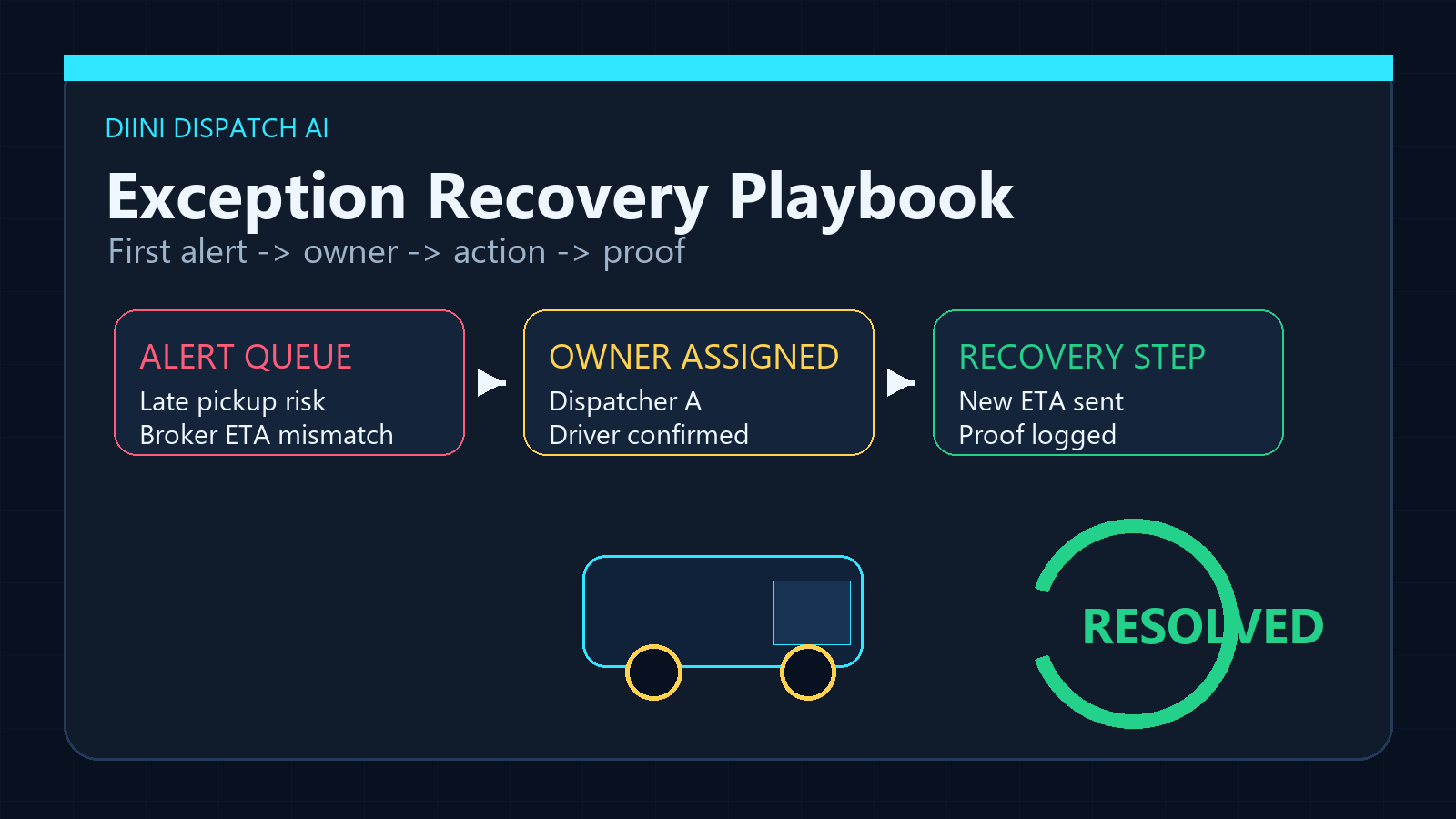
A delay alert is not the problem. The problem is what happens in the first ten minutes after the alert appears. Strong dispatch teams do not wait until the broker calls angry, the driver is stuck, or the receiver is already closed. They turn the first signal into a small recovery workflow: who owns it, what changed, who needs the update, and what proof must be saved.
This article continues the DIINI Dispatch AI workflow series. If you missed the earlier foundation pieces, start with Dispatch Exception Management: 7 Signals Before a Small Delay Becomes a Service Failure and then review Pickup, Delivery, and Delay Updates: 7 Signals Dispatchers Should Track.
Make the alert useful before it gets loud
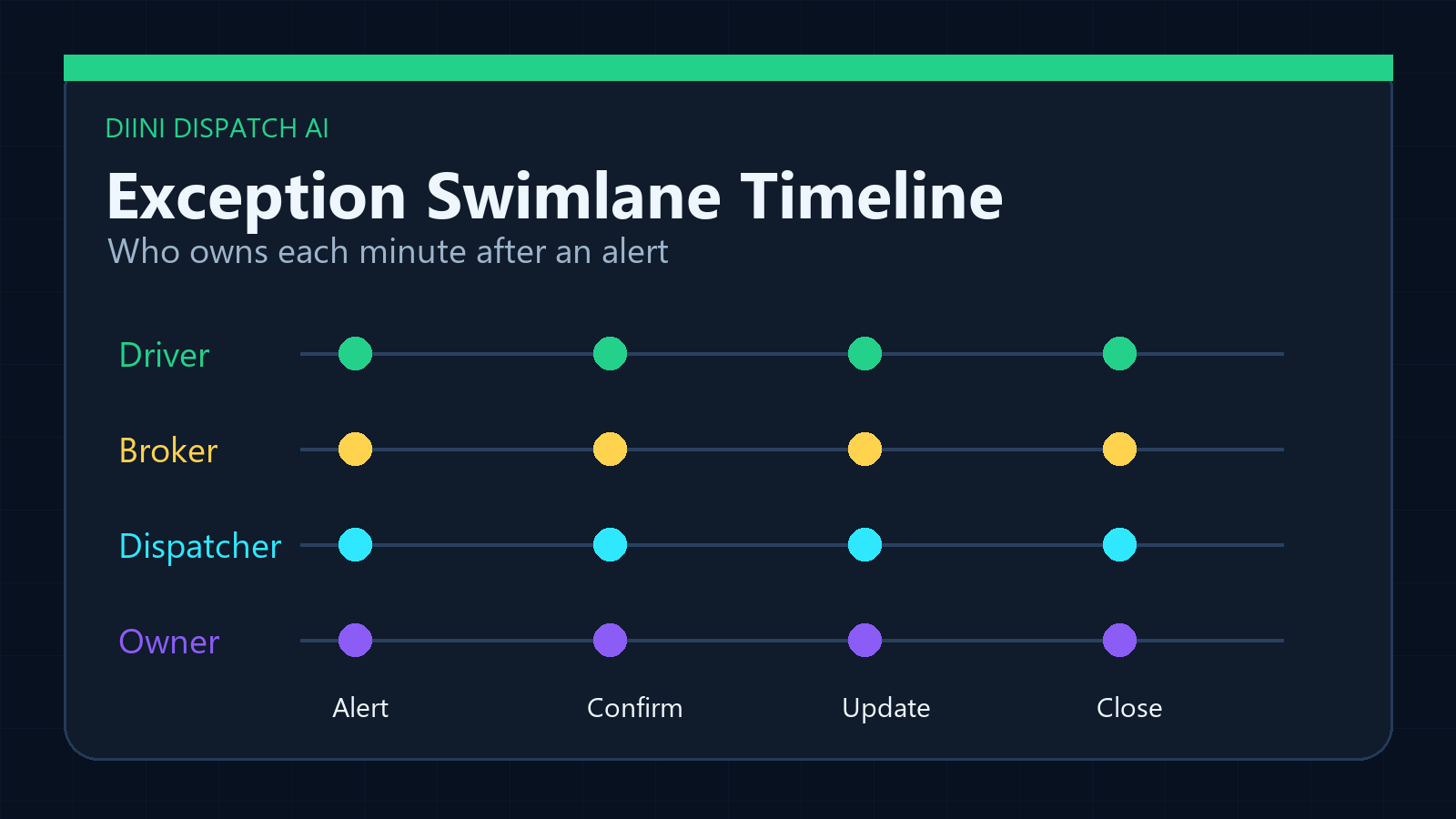
Every exception should answer four plain questions: what changed, when did it change, who is affected, and what decision is needed next. If the alert only says delayed, it is noise. If it says driver still at shipper, appointment risk in 90 minutes, broker update needed, it becomes work the team can act on.
Assign an owner immediately
Exception work fails when everyone sees the same warning and assumes someone else handled it. The first recovery step should assign an owner. That person does not need to solve everything; they need to keep the next action moving and record what happened.
Separate service risk from billing risk
A late pickup, detention clock, missed document, or changed appointment can create different kinds of damage. One affects service. One affects revenue. One affects billing. Treat them separately so the system can protect the load even when the same event touches more than one page.
Update the broker before the broker chases you
A short proactive update usually buys more trust than a long explanation later. The message should be factual: current status, expected next update time, what is being confirmed, and whether the delivery plan is still safe.
Close the loop with evidence
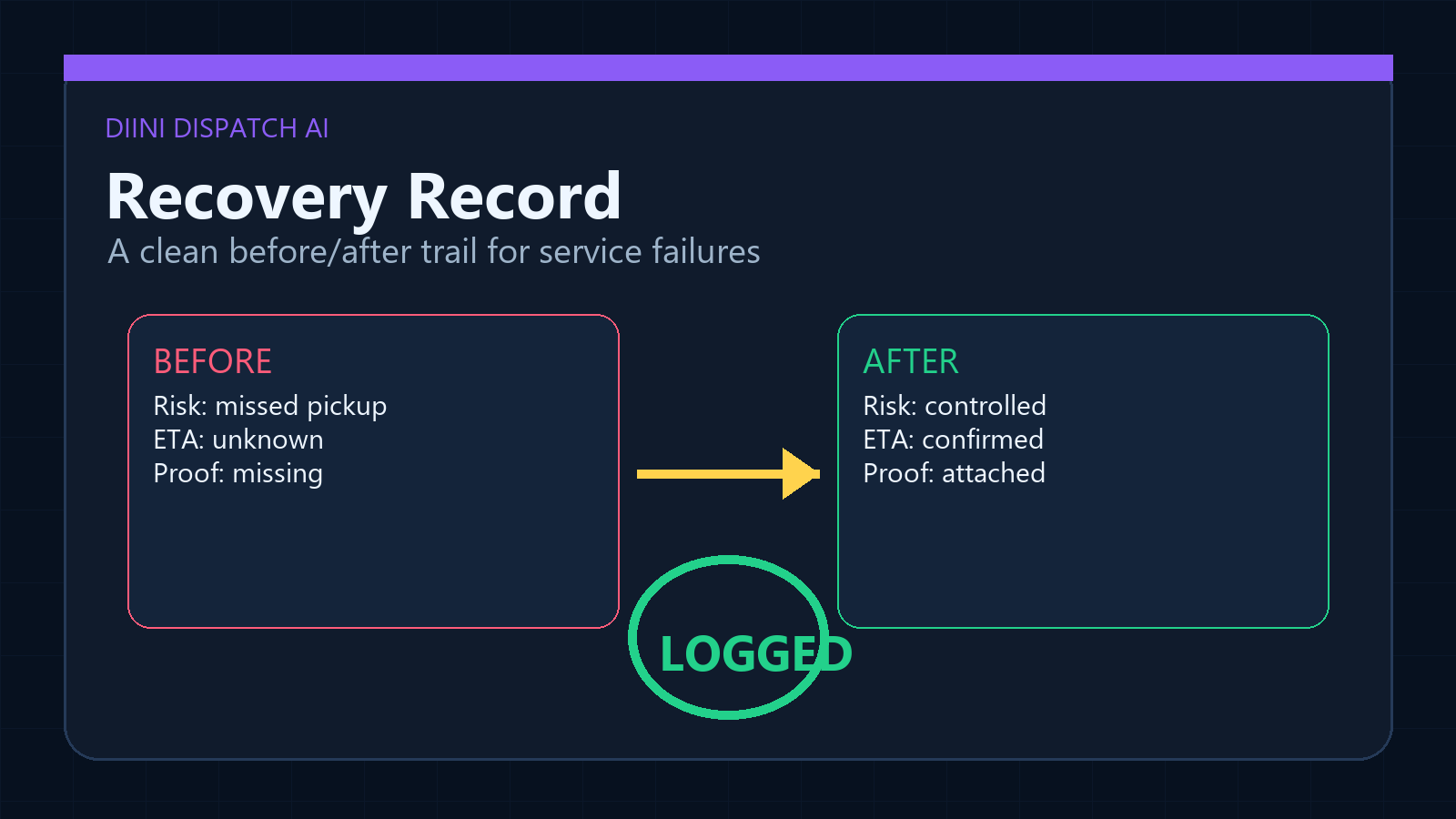
The recovery record should keep timestamps, notes, driver status, broker communication, and any document or accessorial proof. When a load becomes a dispute three days later, the team should not rebuild the story from memory.
How DIINI turns this into a workflow
DIINI Dispatch AI is being built around connected operational records: loads, drivers, broker communication, documents, invoices, alerts, and payment follow-up. The goal is not to replace dispatcher judgment. The goal is to keep every important step visible, auditable, and ready for human approval when the decision matters.
Takeaway
The best exception workflow is boring in the right way: alert, owner, update, proof, closeout. That is how a small delay stays small.
Next in the series, we will keep connecting these workflows so dispatch teams can move from alert to action, from document to invoice, and from negotiation to clean confirmation without losing the record.