

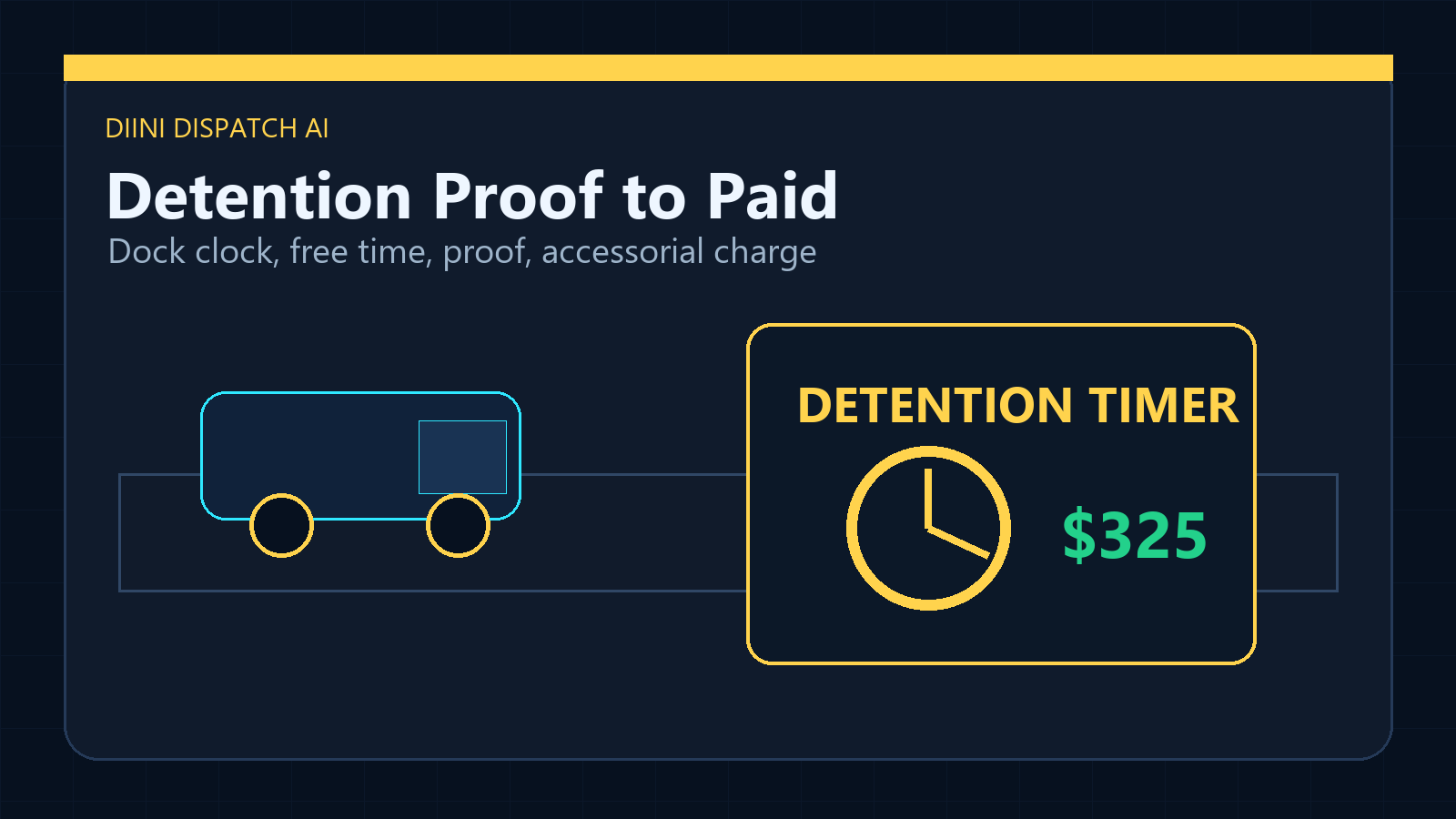
Detention is often lost before accounting ever sees the invoice. The money disappears when check-in is not captured, waiting time is not explained, release time is missing, or the broker was never updated clearly. A good detention workflow is not just a note that says driver waited. It is a chain of proof.
This article continues the DIINI Dispatch AI workflow series. If you missed the earlier foundation pieces, start with Accessorial Tracking for Detention: 7 Proof Points That Protect Dispatch Revenue and then review POD to Invoice: 7 Steps That Protect Cash Flow After Delivery.
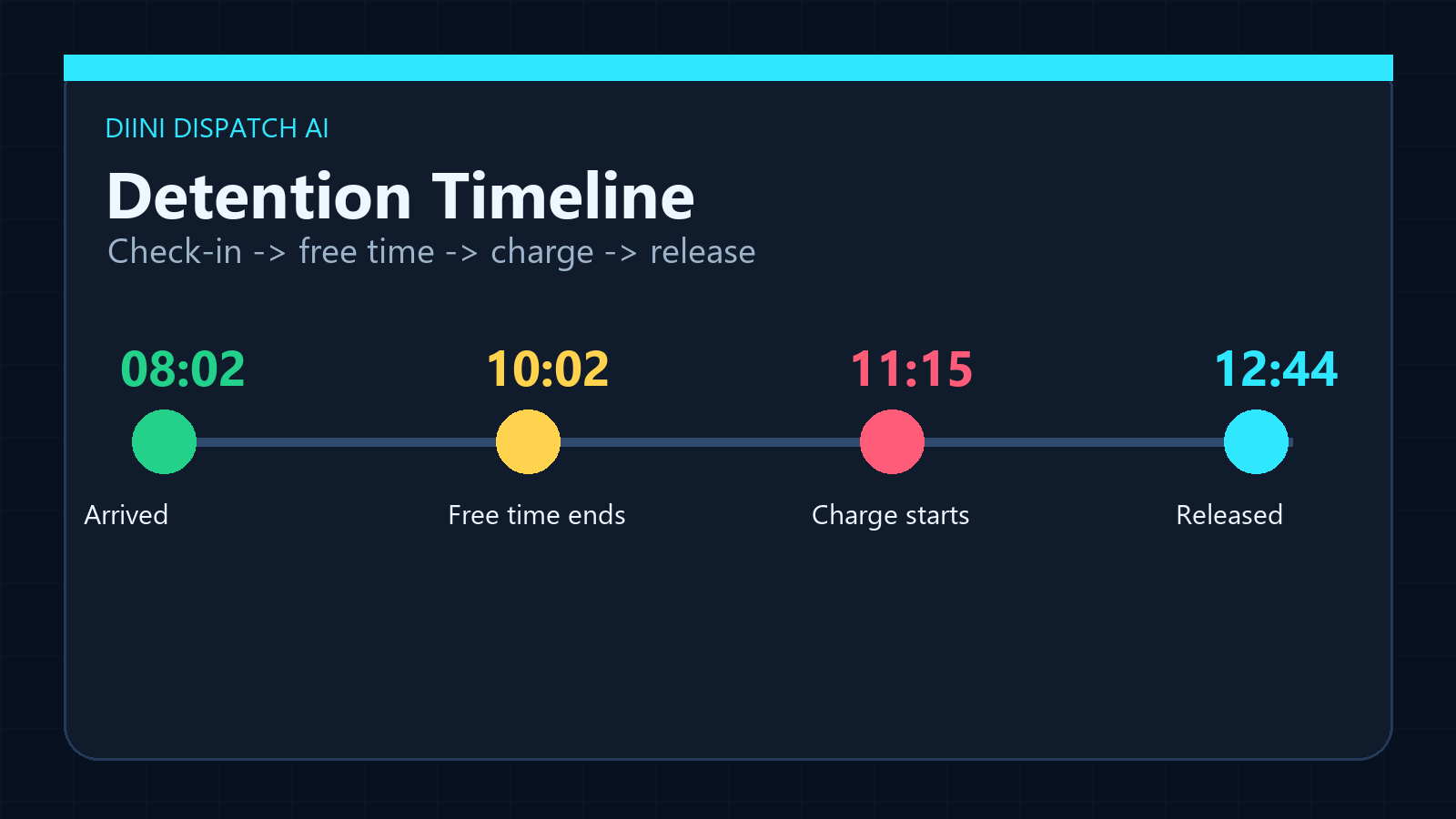
Start the clock with a real check-in record
The first timestamp matters. It should include facility, local time, driver note, and who received the update. If the check-in time is vague, the whole detention claim becomes easy to challenge.
Capture the reason, not only the waiting
Waiting because the dock is full is different from waiting because paperwork is missing. The reason helps dispatch decide whether to push the broker, notify the receiver, or prepare billing proof.
Send a clean warning before the charge appears
A broker is more likely to accept detention when they were warned before the cost arrived. The message can be short: driver checked in, free time ends at this time, detention may apply if loading is not completed.
Keep driver notes simple
Drivers should not need a legal memo. They need a fast way to send check-in, loaded/released time, and a photo or document if needed. The easier the driver path is, the cleaner the accessorial packet becomes.
Move proof into the invoice workflow
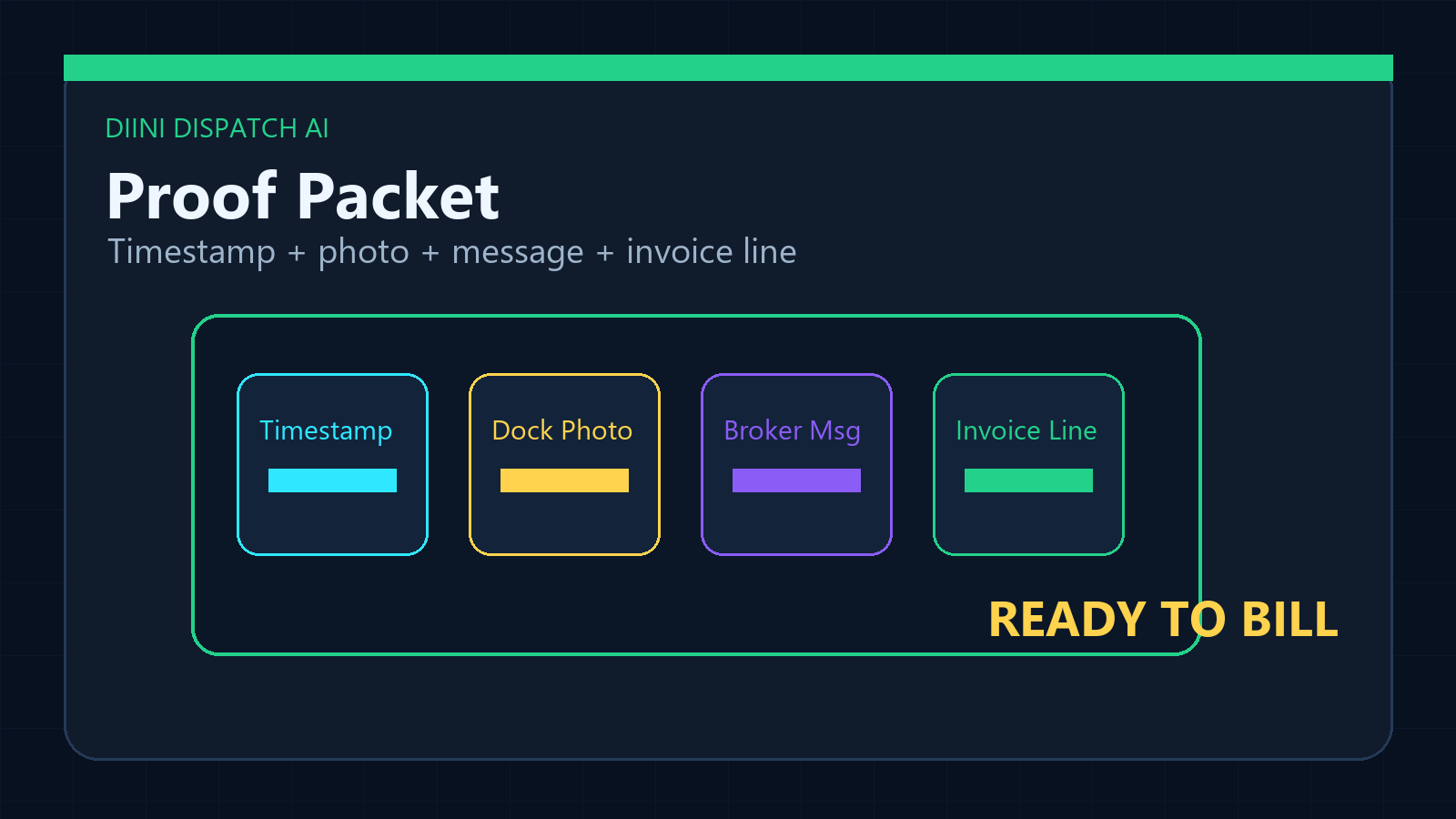
Detention should not live only in chat history. It should move into the invoice closeout with amount, timestamps, broker notice, and supporting note. That is how accessorial revenue survives handoff.
How DIINI turns this into a workflow
DIINI Dispatch AI is being built around connected operational records: loads, drivers, broker communication, documents, invoices, alerts, and payment follow-up. The goal is not to replace dispatcher judgment. The goal is to keep every important step visible, auditable, and ready for human approval when the decision matters.
Takeaway
Detention recovery is not about arguing harder. It is about capturing proof earlier and carrying that proof into billing.
Next in the series, we will keep connecting these workflows so dispatch teams can move from alert to action, from document to invoice, and from negotiation to clean confirmation without losing the record.