

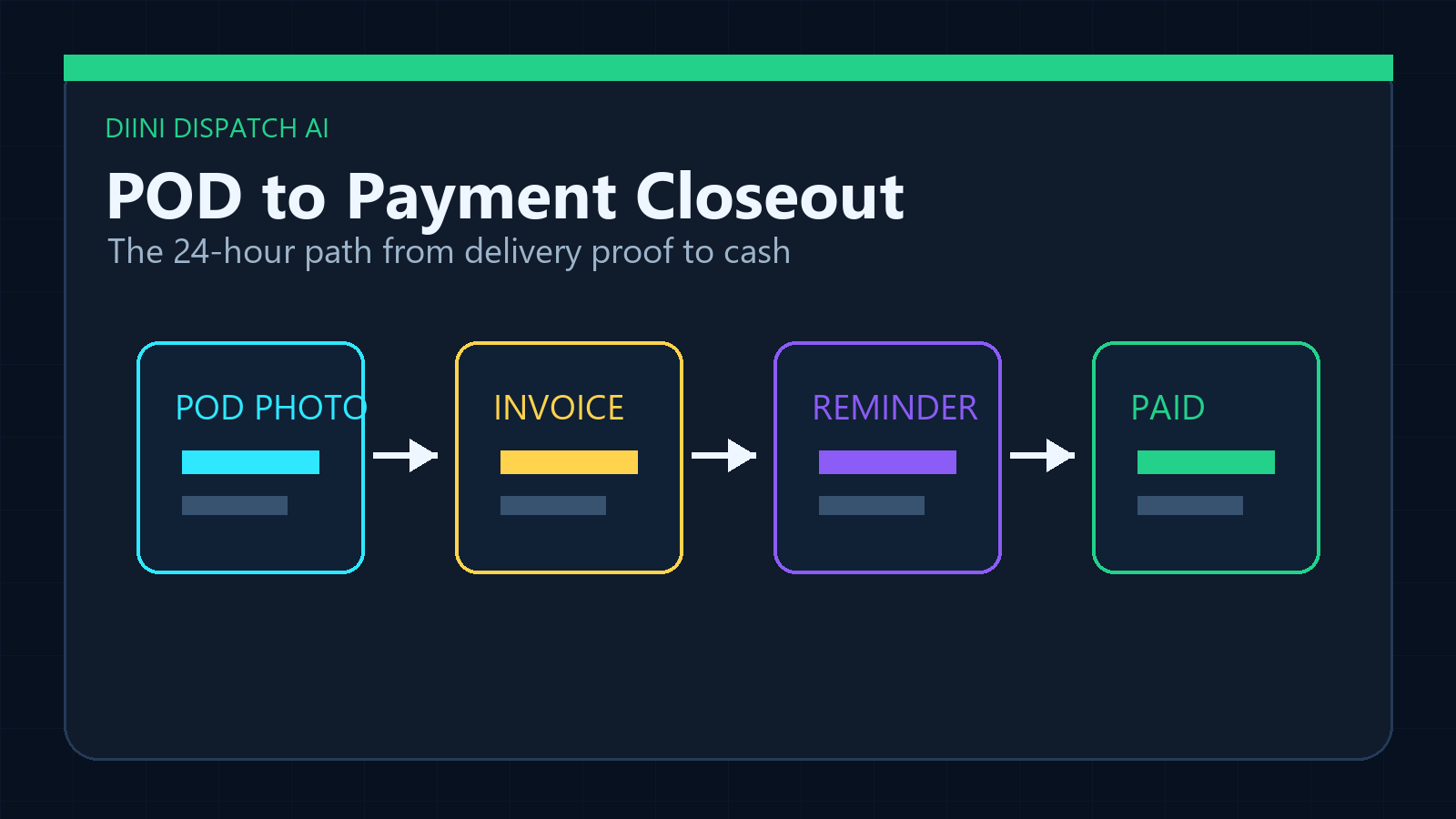
Delivery is not the finish line. For the business, the load is not truly complete until the POD is clean, the invoice is correct, the broker has the paperwork, and payment follow-up is scheduled. A 24-hour closeout routine keeps the load from going quiet at the exact moment cash flow depends on speed.
This article continues the DIINI Dispatch AI workflow series. If you missed the earlier foundation pieces, start with POD to Invoice: 7 Steps That Protect Cash Flow After Delivery and then review Driver Document Collection: 7 Checks Before POD and BOL Slow Down Billing.
Hour one: confirm delivery and document status
The first hour is for basic truth. Was the load delivered? Is the POD uploaded? Is the document readable? Does the load ID match? If the answer is no, the team should fix it before creating the invoice.
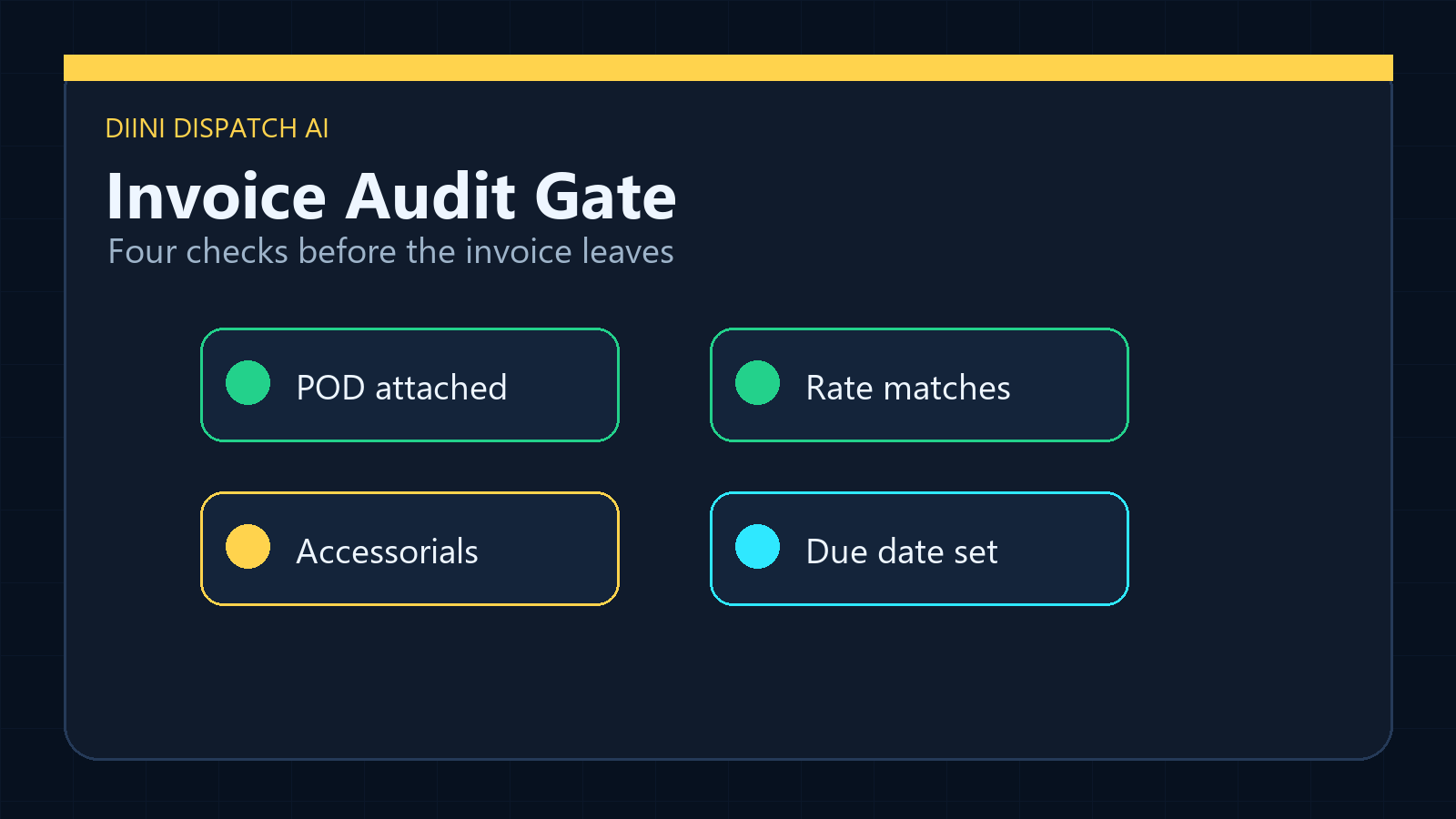
Hour four: audit the invoice inputs
A clean invoice starts with clean inputs: confirmed rate, accessorials, detention, TONU, layover, broker name, broker email, and due date. This prevents the classic mistake of sending a fast invoice that must be corrected later.
Same day: send with context
The broker should receive more than an attachment. A short message should mention the load, lane, invoice number, total, due date, and attached proof. That makes the email easier to process and harder to ignore.
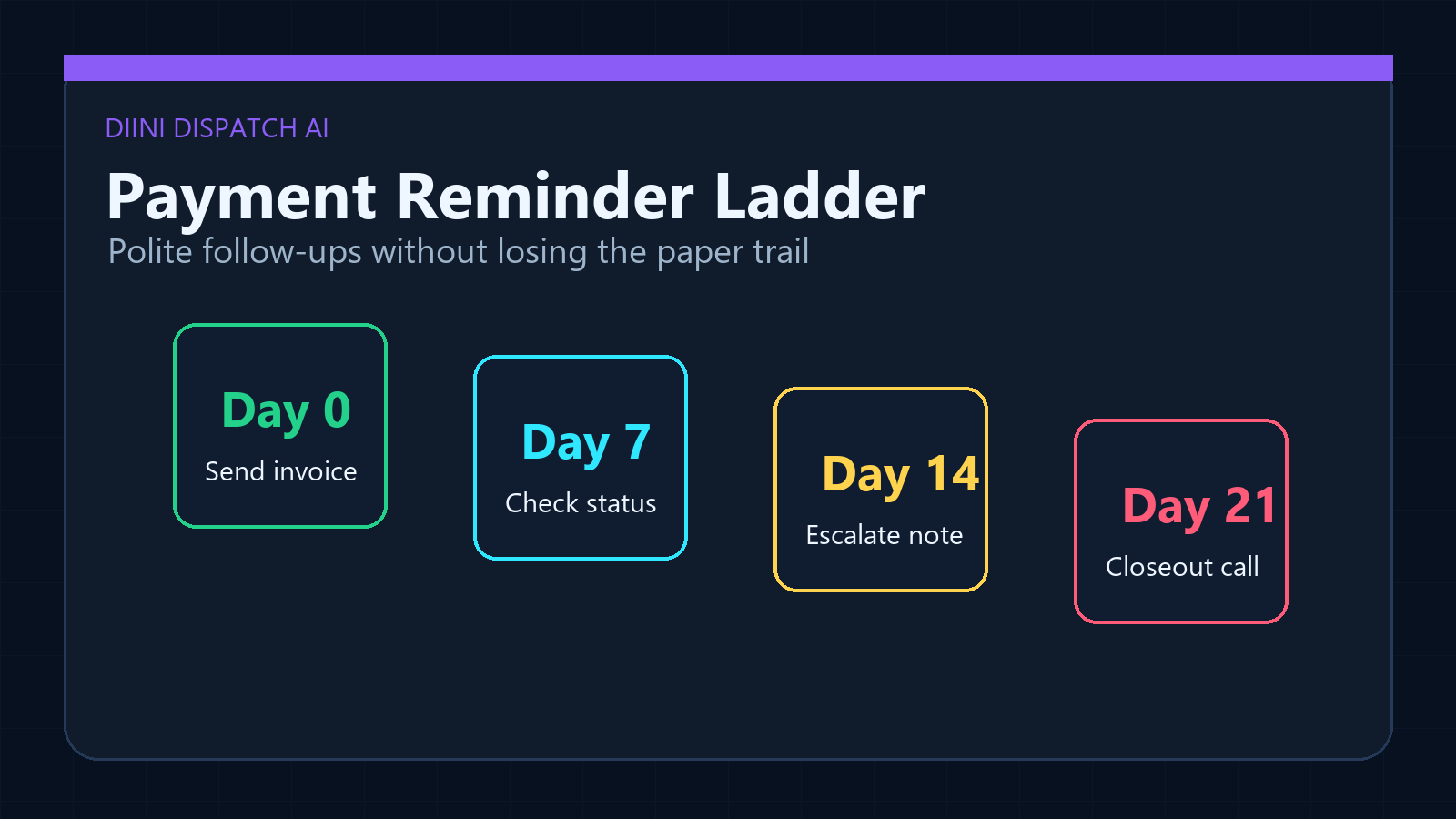
Next day: schedule the follow-up ladder
Payment follow-up should not depend on memory. The system should know when reminder one, reminder two, and final notice are due. The tone should stay professional, but the workflow should not sleep.
Close only when payment is verified
A paid status should mean payment evidence exists. Marking a load paid too early makes reports look better while cash control gets weaker. Closeout should include payment method, date, amount, and who verified it.
How DIINI turns this into a workflow
DIINI Dispatch AI is being built around connected operational records: loads, drivers, broker communication, documents, invoices, alerts, and payment follow-up. The goal is not to replace dispatcher judgment. The goal is to keep every important step visible, auditable, and ready for human approval when the decision matters.
Takeaway
The fastest billing teams do not rush blindly. They run the same 24-hour closeout every time.
Next in the series, we will keep connecting these workflows so dispatch teams can move from alert to action, from document to invoice, and from negotiation to clean confirmation without losing the record.