

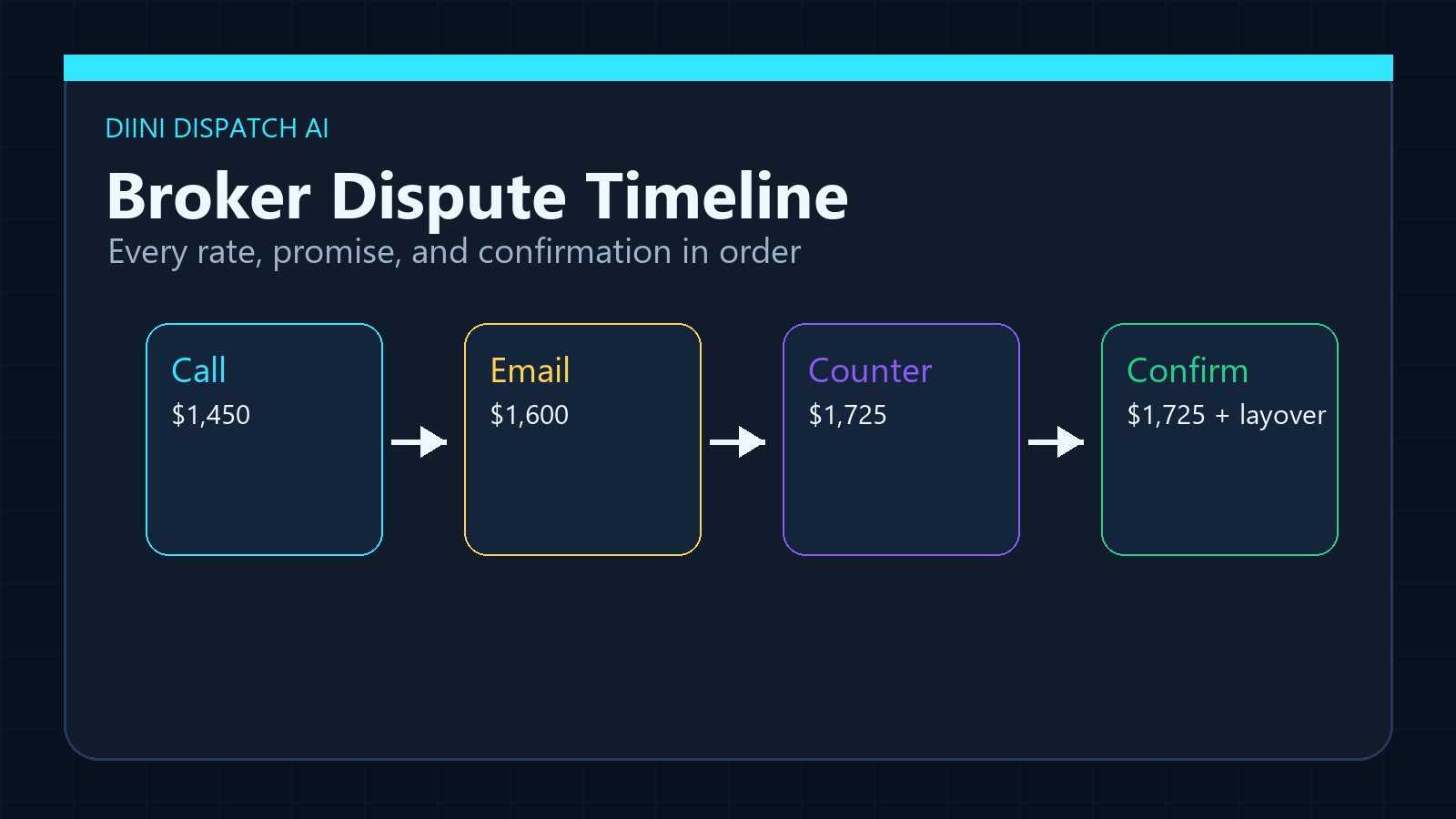
A broker dispute rarely starts as a dispute. It starts as a small gap: a verbal offer that was not saved, a changed pickup time, a detention warning with no timestamp, or a rate confirmation that arrived after the truck was already moving. The timeline is what protects the team later.
This article continues the DIINI Dispatch AI workflow series. If you missed the earlier foundation pieces, start with Broker Communication Log: 7 Records Dispatch Teams Should Keep on Every Load and then review Dispatch Communication Providers: 7 Checks Before Sending SMS, WhatsApp, Email, or Calls.
Log the first offer clearly
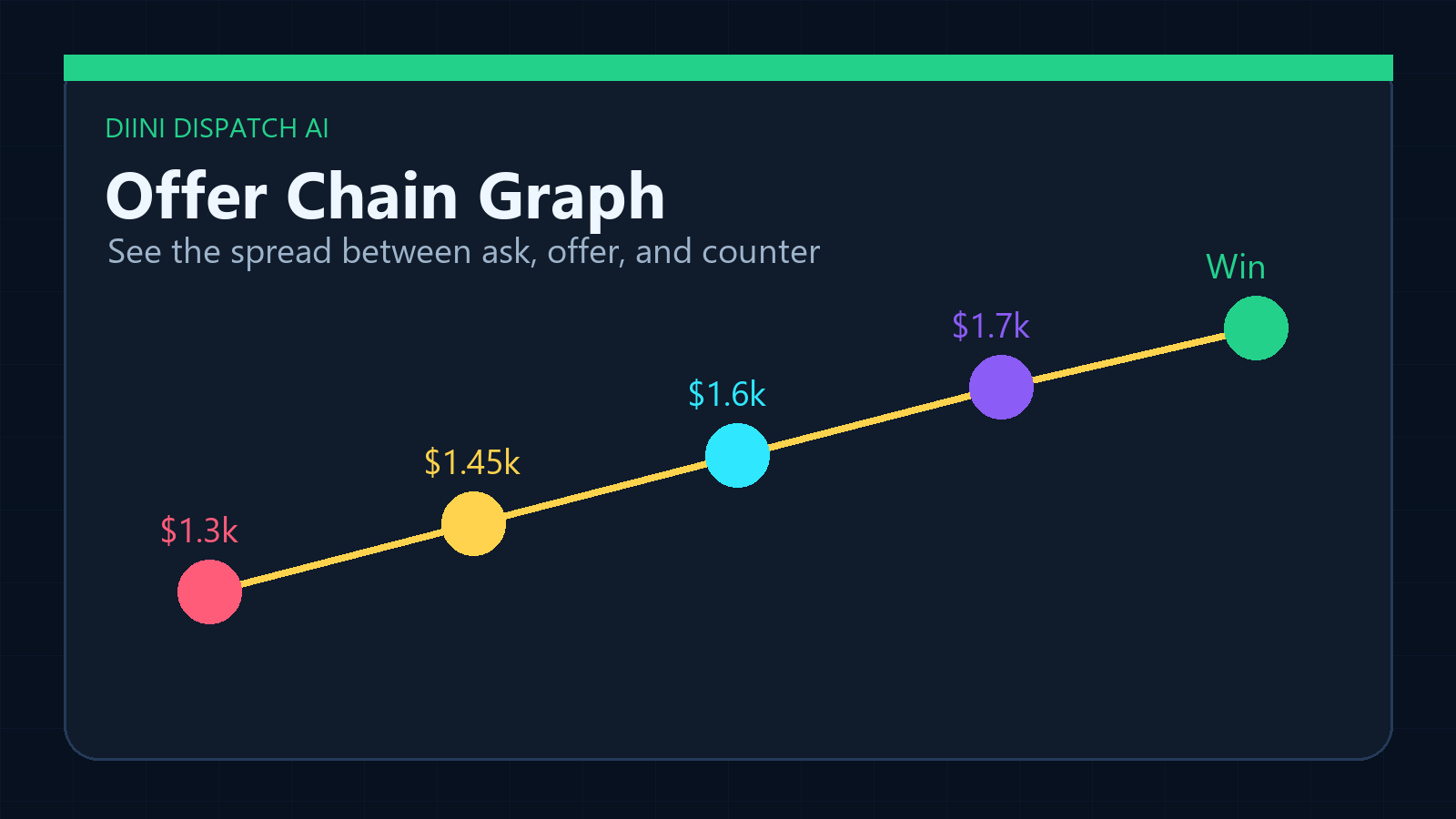
The first broker offer sets the story. Save the amount, lane, date, broker name, and what terms were included. If the offer changes later, the team can see the movement instead of arguing from memory.
Keep counters tied to rules
A counter should not be random. It should connect to minimum rate, target rate, risk, deadhead, urgency, or accessorial exposure. That makes the negotiation explainable to the owner and defensible to the broker.
Separate price from terms
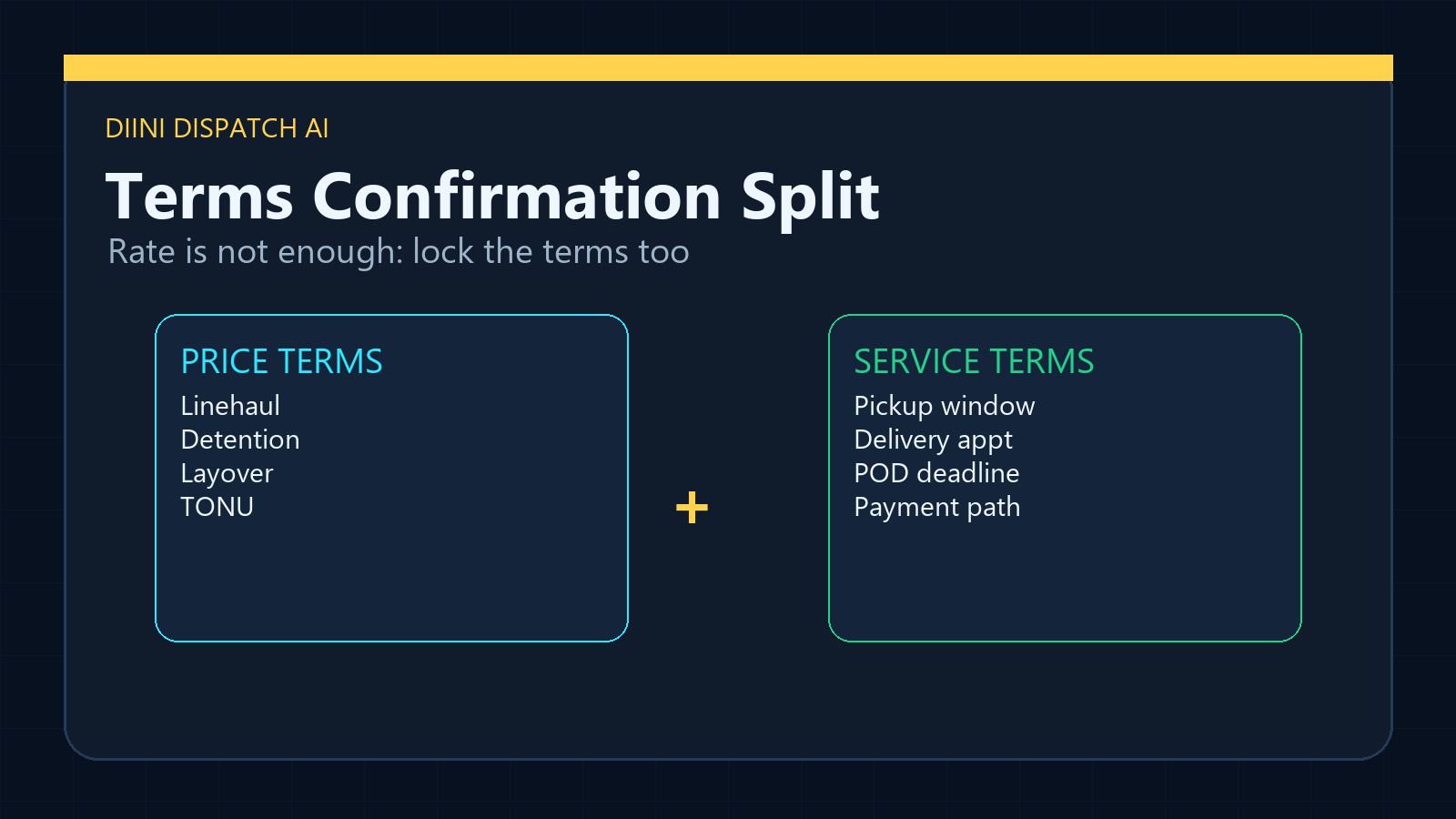
A good rate with bad terms can become a bad load. The timeline should show pickup, delivery, weight, commodity, detention, layover, TONU, and accessorials. Price is only one part of the agreement.
Attach documents to the same story
Rate confirmation, BOL, POD, detention proof, and invoice should not feel like separate islands. When they are connected to the same load timeline, dispute review becomes much faster.
Use the timeline for coaching
A timeline is not only for defense. It helps the dispatch team learn which brokers change terms, which lanes need stronger counters, and which messages get clean confirmations faster.
How DIINI turns this into a workflow
DIINI Dispatch AI is being built around connected operational records: loads, drivers, broker communication, documents, invoices, alerts, and payment follow-up. The goal is not to replace dispatcher judgment. The goal is to keep every important step visible, auditable, and ready for human approval when the decision matters.
Takeaway
The best time to build a dispute record is before anyone is angry.
Next in the series, we will keep connecting these workflows so dispatch teams can move from alert to action, from document to invoice, and from negotiation to clean confirmation without losing the record.