

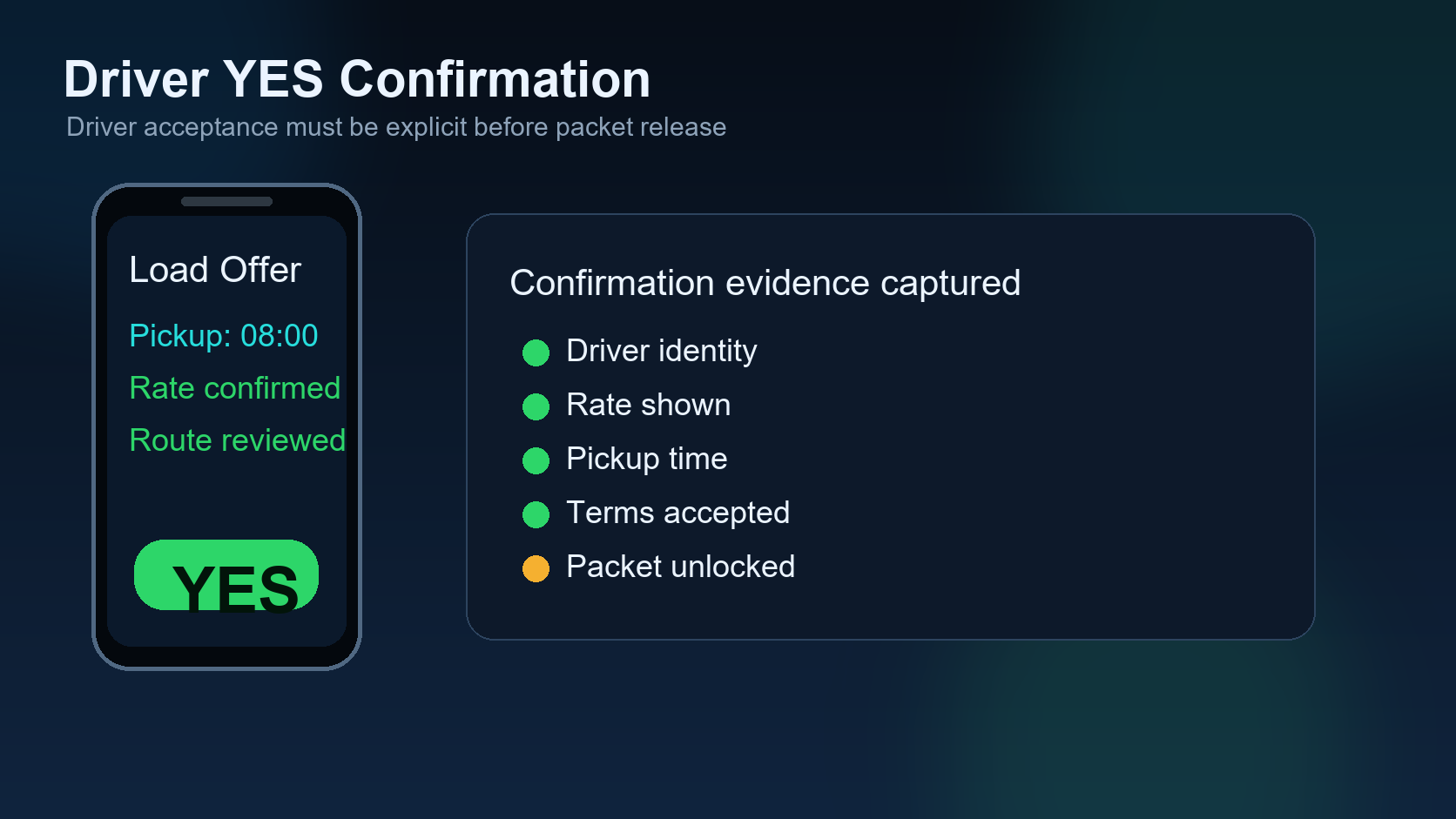
Driver YES confirmation is the moment where a load stops being an idea and starts becoming a real dispatch plan. The load has already been evaluated. The driver looks like a good fit. The rate may be strong. But until the driver clearly accepts the offer, the dispatcher should not treat the load as released.
Previous article in the series: AI Driver Assignment.
This is the fifth article in the DIINI AI series. It continues directly from AI Driver Assignment, where the goal was to match the right driver to the right load. Now the question becomes simpler and more serious: did the driver actually say yes, and is the system safe to move forward?
In a busy operation, this step can get rushed. A dispatcher may hear “sounds good” on the phone, receive a partial text, or assume a driver is available because the truck was empty an hour ago. AI can help organize those signals, but it should never invent approval. A proper dispatch workflow needs a clear YES record that a human can audit later.
Why driver YES confirmation matters
A load offer is not just a message. It contains time, money, equipment, pickup responsibility, delivery commitment, and risk. If a carrier releases a dispatch packet before the driver has confirmed, the team may create confusion for the broker, miss the pickup window, or put the wrong driver on a lane.
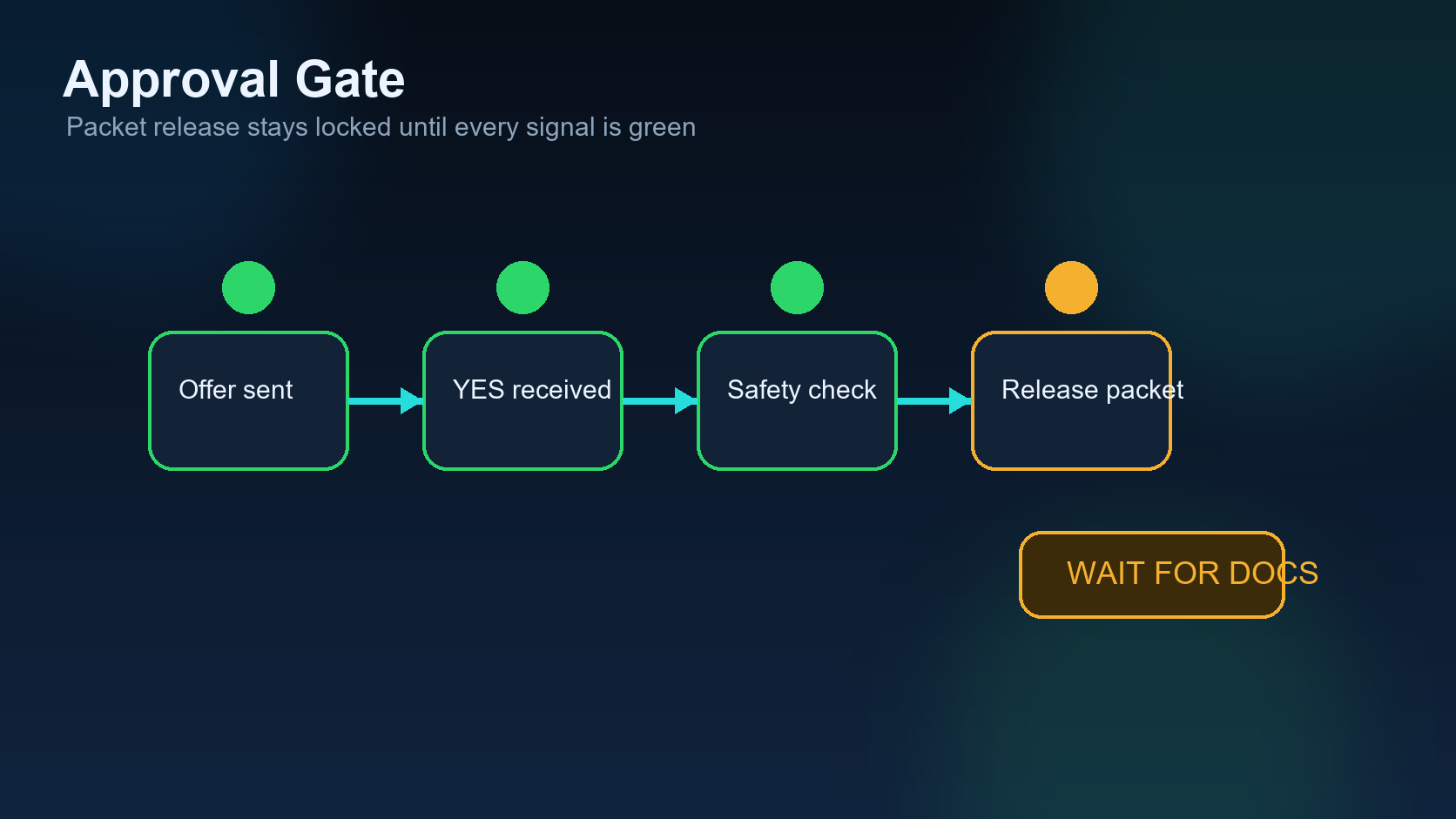
The best systems treat YES confirmation like a gate. The dispatcher can prepare the offer, the AI can summarize the load, and the driver can respond through SMS, WhatsApp, email, or a portal. But the dispatch packet should stay locked until that confirmation is captured.
1. Confirm the driver understood the load
The driver should see the essential details before accepting: pickup city, delivery city, appointment time, equipment, weight, commodity, and pay. A short message is fine, but it should not hide the important parts. If the driver says yes without seeing the details, the approval is weak.
2. Check the answer is clear
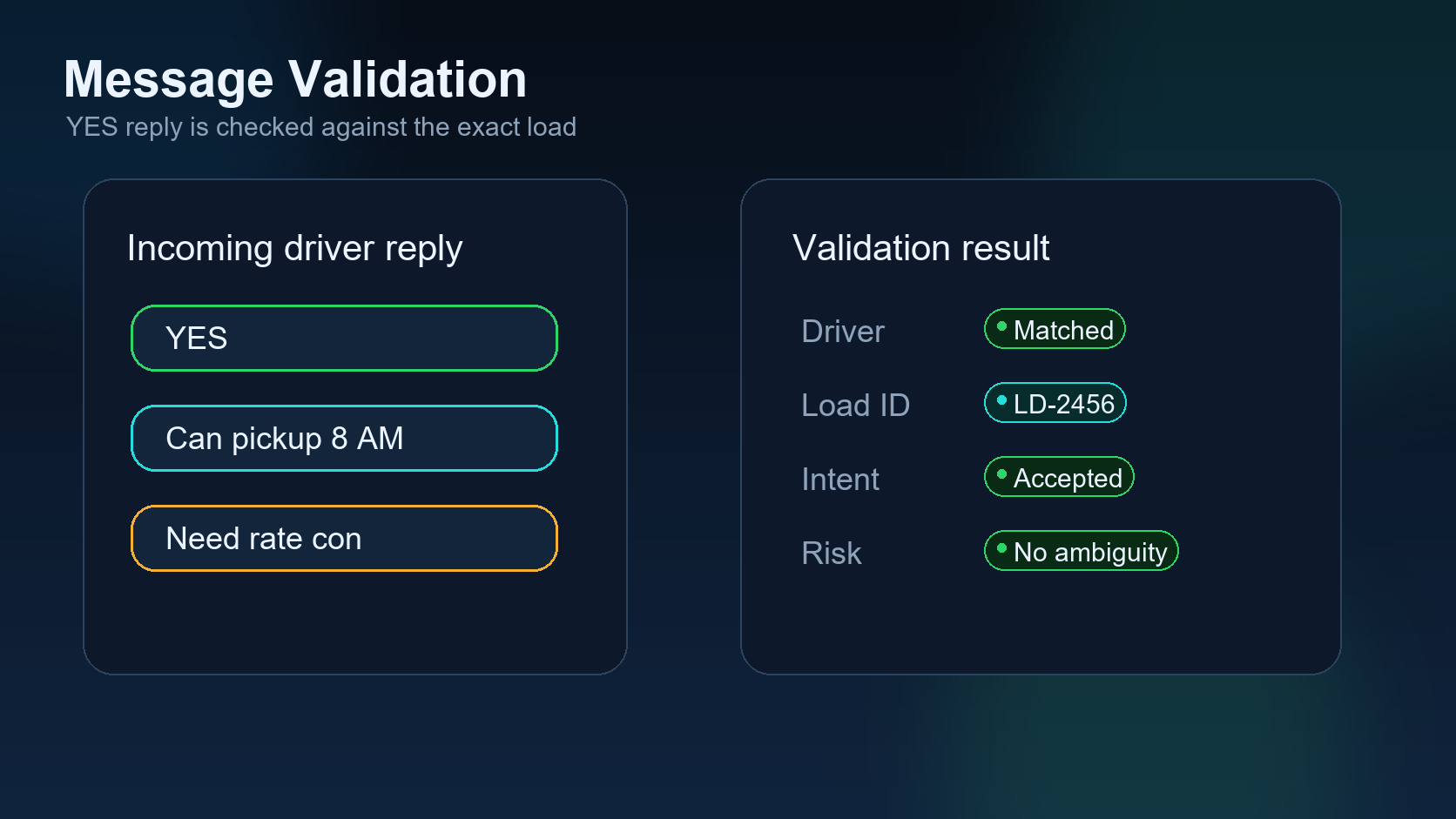
A dispatch system should separate a real YES from a casual reply. “Ok,” “maybe,” and “call me” are not the same as accepting the load. AI can classify replies, but a human dispatcher should still be able to review the message trail.
3. Match the YES to the right load
Drivers may receive more than one offer in a day. The confirmation should be tied to a specific load ID, not just a driver name. This avoids one of the oldest dispatch problems: everyone thinks they are talking about the same load, but they are not.
4. Recheck timing before release
A driver can accept a load and still become late if the truck is too far away. Before release, the system should compare the current location, pickup appointment, travel time, and required arrival buffer. A good YES confirmation does not ignore the clock.
5. Keep compliance visible
The driver may be willing, but the truck still needs to be legal and ready. License, medical, insurance, inspection, ELD, and authority checks should remain visible next to the confirmation. The dispatcher should not have to hunt through old notes to know whether the driver is safe to send.
6. Record who approved the release
Human approval is still important. The system can say the driver confirmed, but a dispatcher or carrier manager should decide whether to release the packet. That approval record protects the company when questions come later.
7. Do not send the dispatch packet too early
The safest workflow is simple: evaluate the load, assign the driver, receive driver YES confirmation, verify the packet, then release. If any piece is missing, the system should block or warn instead of pretending the load is ready.
How AI should help
AI should reduce noise. It can summarize the load, classify the driver reply, flag missing details, and remind the dispatcher what still needs approval. But AI should not fake consent, skip compliance, or release documents without a recorded decision.
In the next article, we move from driver confirmation to the dispatch packet itself: what should be checked before the paperwork is released to the driver.
Real dispatch example: why YES must be captured clearly
A dispatcher may think the driver accepted a load because the driver answered the phone and said the rate sounded fine. That is not enough. A clean YES confirmation should include load identity, pickup city, pickup time, delivery city, delivery time, rate, equipment, and any special requirement. If the driver later says, “I did not know it was a live unload,” the dispatch record should show exactly what was confirmed.
This matters most when the team is busy. A written YES confirmation protects the dispatcher, the driver, and the company before the packet is released.
YES confirmation checklist
| Item | Confirm before release | Risk if skipped |
|---|---|---|
| Load identity | Broker, pickup, delivery, reference. | Driver accepts the wrong load details. |
| Timing | Pickup and delivery appointments. | Late pickup or missed delivery window. |
| Money | Rate and accessorial expectations. | Disputes after delivery. |
| Special rules | Tracking, seal, lumper, PPE, temperature. | Receiver rejection or broker complaint. |
Common mistake
Do not release the packet because “the driver usually says yes.” Treat every load as a separate commitment and capture confirmation every time.