


AI driver assignment helps dispatchers match the right driver to the right load after the load has passed evaluation. A load can look profitable on paper, but it still needs the right driver, the right equipment, the right pickup timing, and the right approval path before an offer is sent.
This is where many dispatch operations lose control. A dispatcher may find a strong load, but then rush the driver offer, miss a compliance issue, forget to confirm the rate, or send a message before the load is truly ready. AI can help, but only when it supports the dispatcher instead of replacing judgment.
This fourth article in the DIINI AI series continues the workflow from AI Load Evaluation: 7 Checks Before You Book a Load. Once the load passes evaluation, the next question is simple: which driver should receive the offer first, and what must be verified before that offer goes out?
What AI driver assignment means
AI driver assignment is the process of using operational data to recommend the best driver for a specific load. It is not just “send the load to the first available driver.” A useful assignment system looks at the load, the driver, the timing, the route, the equipment, the rate confirmation, and the risk profile before preparing an offer.
In a modern dispatch workflow, AI should help answer practical questions:
- Is the driver actually available?
- Does the driver have the right equipment?
- Is the driver close enough to pickup?
- Does the lane fit the driver’s current position and hours?
- Has the rate confirmation been verified?
- Should the offer be sent now, or should a dispatcher review it first?
This connects directly to the first two articles in the series: AI Truck Dispatch: 7 Proven Benefits for Carriers and AI Agents in Truck Dispatch: 7 Proven Workflow Roles. AI becomes useful when it turns scattered data into a safer decision path.
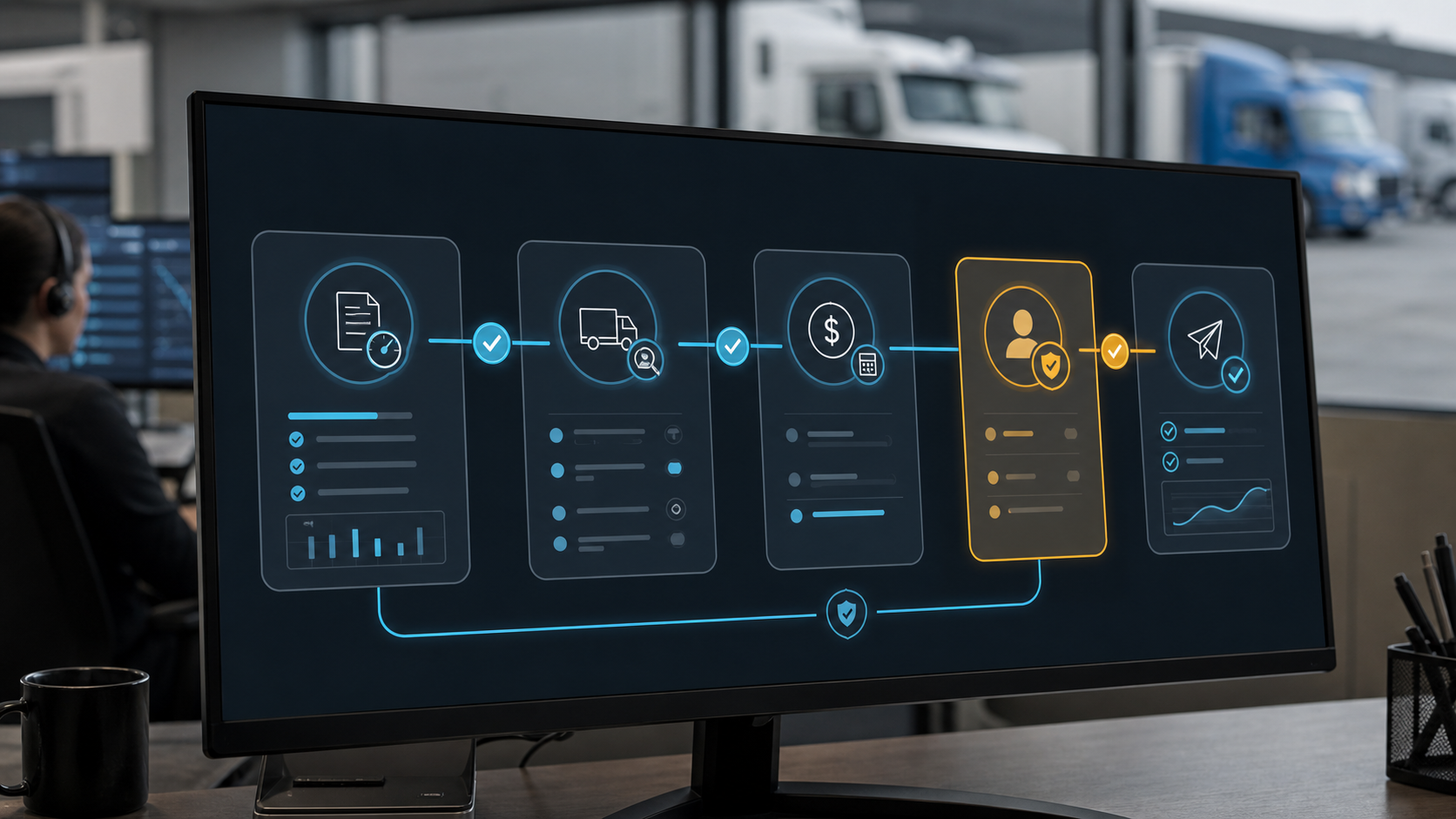
Why driver matching needs guardrails
Driver matching is not a harmless recommendation. If the system sends an offer too early, it can create confusion with the driver, the broker, or the carrier. A bad assignment can also trigger downstream problems: missed pickup windows, incorrect driver status, duplicate messages, invoice delays, and messy exception handling.
That is why AI driver assignment should be treated as a controlled workflow. The system can prepare the recommendation, but the offer should only move forward when the required checks are complete.
The most important guardrail is simple: do not send a driver offer until the load is verified and a dispatcher can approve the action. Automation should make the dispatcher faster, not remove the dispatcher from the decision.
7 checks before sending a load offer
1. Load status must be ready for assignment
The load should already be evaluated and ready to move into assignment. If the load is still under review, missing broker details, missing a rate confirmation, or flagged for risk, it should not be offered to a driver yet.
This protects the dispatcher from sending an offer that later has to be corrected or withdrawn.
2. Rate confirmation must be verified
A driver offer should be based on verified information. The final rate, pickup, delivery, commodity, weight, and special terms should be checked before the system prepares the message.
This is especially important when AI is helping generate the offer text. If the source data is wrong, a polished message only makes the mistake look more official.
3. Driver availability must be current
A driver marked “available” yesterday may not be available today. AI assignment should use current status, location, hours, and operational context. If the driver is already loaded, off duty, waiting on detention, or missing a check-in, that should affect the match score.
Good dispatch systems do not treat driver availability as a static field. They treat it as live operational context.
4. Equipment and lane fit must match the load
The system should compare the load requirements against the driver’s equipment and lane history. Dry van, reefer, flatbed, weight, pickup requirements, and delivery timing all matter.
A strong AI match is not just “closest driver.” It is the driver who can realistically complete the load with the least operational risk.
5. Distance and timing must protect pickup reliability
Deadhead distance, pickup window, current location, and likely traffic all affect whether a driver can make the appointment. AI can help calculate this quickly, but the dispatcher still needs a clear recommendation.
The best systems make the tradeoff visible: a driver may be close, but not compliant; another may be farther away, but safer for the lane.
6. Message channel must fit the driver
Some drivers respond fastest by SMS. Some prefer WhatsApp. Some carriers may need email confirmation for certain steps. AI driver assignment should prepare the right message for the right channel, while still respecting approval and communication rules.
The point is not to send more messages. The point is to send the correct message at the correct step.
7. The dispatcher must approve the final offer
The final check is human approval. A dispatcher should be able to review the selected driver, load details, rate confirmation status, message preview, and assignment reason before the offer is sent.
This is the difference between useful automation and risky automation. AI can prepare the work. The dispatcher should approve the action.

Human approval keeps the system safe
In trucking, a small operational mistake can become expensive. A wrong pickup time, a missing rate confirmation, a driver who cannot legally move, or a message sent too early can create a chain reaction.
That is why human approval belongs at the center of AI driver assignment. The dispatcher should not have to rebuild the whole decision manually, but they should be able to inspect the recommendation and stop the workflow when something does not look right.
A well-designed system makes this easy. It should show the driver match, the reason for the recommendation, the message preview, and the guardrails that have passed or failed.
How DIINI Dispatch AI handles driver assignment
DIINI Dispatch AI is being designed around guarded automation. The goal is not to let AI freely send offers, update statuses, or close loads without context. The goal is to help carriers and dispatchers move faster while protecting the workflow.
In a guarded driver assignment flow, the system can:
- read live load and driver data,
- recommend a driver based on fit, status, and lane context,
- require rate confirmation before an offer is sent,
- generate the driver offer message,
- wait for dispatcher approval,
- record the assignment and communication history,
- then continue into lifecycle tracking only after the assignment is valid.
This creates a cleaner chain from load evaluation to driver assignment, driver response, pickup, delivery, and billing. Each step has a purpose, and each step can be checked before the next one begins.
Final takeaway
AI driver assignment works best when it is treated as a decision support system, not an uncontrolled sender. The AI can rank drivers, prepare the message, flag missing information, and speed up the workflow. But the dispatcher should stay in control of the final action.
The practical rule is simple: evaluate the load first, verify the rate confirmation, match the right driver, and require approval before sending the offer.
That is how AI driver assignment becomes useful in real dispatch work: faster decisions, fewer preventable mistakes, and a safer path from load board to delivery.
Continue the AI Dispatch Series
This article is part of the Diini Dispatch AI series for carriers, brokers, and dispatch teams that want safer load decisions, clearer driver communication, and a more automated dispatch workflow.
Previous in the series: AI load evaluation
Related guides
- AI Truck Dispatch: 7 Proven Benefits for Carriers — Part 1 — why AI dispatch matters for carriers
- AI Agents in Truck Dispatch: 7 Proven Workflow Roles — Part 2 — how AI agents divide dispatch work
- AI Load Evaluation: 7 Checks Before You Book a Load — Part 3 — how loads are checked before booking
Want to see the workflow in action? Visit the Diini Dispatch AI workspace or contact Diini Dispatch AI to request access.
Next in the DIINI AI series: after matching the driver, the workflow moves to Driver YES Confirmation, where the system verifies the driver accepted the load before the dispatch packet is released.
Dispatcher example: when the closest driver is not the right driver
A driver may be closest to the shipper but still be the wrong assignment. Maybe the truck is available, but the driver has a delivery delay from the previous load, dislikes that receiver, has low hours, or needs a reset. A real assignment workflow should compare more than distance. It should check equipment, hours, appointment timing, lane preference, communication reliability, and whether the driver clearly accepts the load.
AI helps when it turns these scattered details into a clear assignment recommendation, but the dispatcher still needs the final call because driver context is often human and current.
Assignment decision table
| Question | Why it matters | Action |
|---|---|---|
| Can the driver make pickup? | Prevents late pickup and service failure. | Require ETA buffer before offering. |
| Is the equipment correct? | Stops preventable rejections. | Confirm trailer type, temp, straps, seals, or special needs. |
| Did the driver say YES? | Separates assumption from acceptance. | Capture written confirmation before packet release. |
| Is the lane realistic? | Protects driver satisfaction and reload plan. | Check delivery market and next availability. |
FAQ
Should AI automatically assign drivers? Only after the carrier defines clear rules. For most teams, AI should recommend the assignment and let the dispatcher approve it.