


AI truck dispatch is changing how carriers evaluate loads, prepare negotiations, monitor drivers, and collect payment. The goal is not to replace an experienced dispatcher. It is to help that dispatcher make faster, clearer, and safer decisions using verified operating data.
But AI is often described in a way that creates more confusion than clarity. For a carrier, dispatcher, or logistics operator, the useful question is not, “How advanced is the model?” The useful question is, “Can this system improve a real decision without creating a new risk?”
This first article in the DIINI AI series explains artificial intelligence in practical terms and shows where it belongs inside a modern truck dispatch operation.
What AI truck dispatch actually means
Artificial intelligence is software that can analyze information, recognize patterns, generate recommendations, or produce useful content from the data it receives. Unlike a traditional rule that always follows one fixed instruction, an AI system can evaluate several factors together and produce a decision or draft that fits the situation.
In truck dispatch, those factors may include:
- Load rate and rate per mile
- Trip miles and deadhead distance
- Equipment type and cargo requirements
- Estimated fuel and operating costs
- Driver location, availability, and preferences
- Broker identity, payment history, and risk indicators
- Pickup and delivery windows
- Previous negotiation outcomes
The AI does not create these facts. It organizes them, compares them, and helps the dispatcher see the strongest option faster.
Automation and AI are not the same thing
Automation follows a predefined process. For example, when a signed proof of delivery is uploaded, an automation can create an invoice draft and schedule payment reminders.
AI handles decisions that require interpretation. It may review a load and classify it as Best, Good, or Avoid. It may prepare a negotiation target based on the lane, current offer, operating minimum, and previous broker behavior.
The strongest AI truck dispatch systems combine both automation and intelligence:
- Automation moves information through a reliable workflow.
- AI evaluates the information and recommends the next action.
- A safety layer enforces non-negotiable business rules.
- A human approves high-impact or low-confidence decisions.
Where AI truck dispatch delivers value
1. Load evaluation
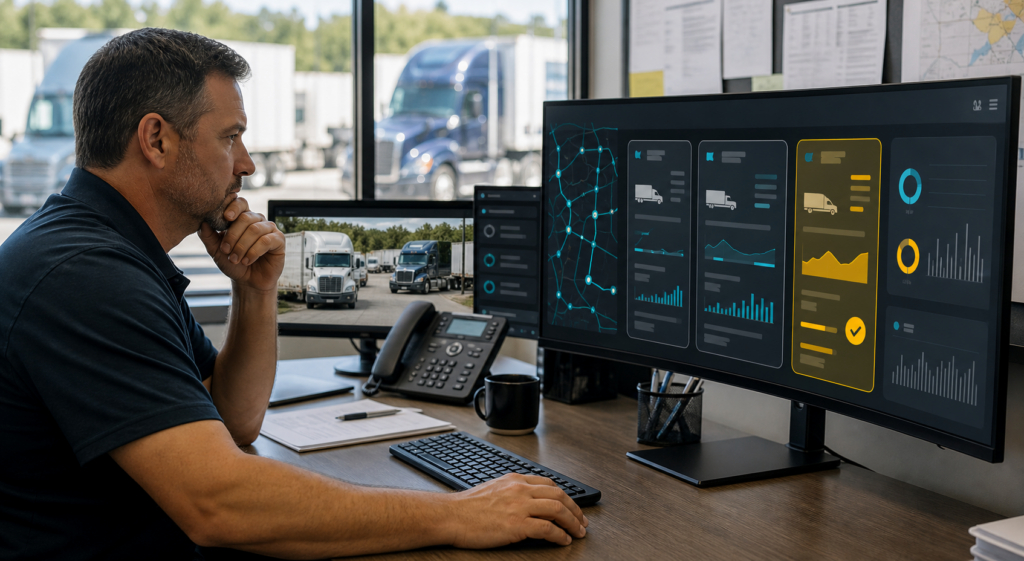
A dispatcher may review many loads before finding one that fits a truck. AI truck dispatch can calculate rate per mile, estimated margin, deadhead impact, equipment compatibility, and known risk. The result is a ranked list instead of a collection of disconnected offers.
2. Negotiation preparation
AI can recommend an opening ask, a target rate, and a walk-away point. It can also draft a professional response such as:
Our truck is empty 18 miles from pickup and can check in today. Based on the lane, reefer requirements, and delivery schedule, can you approve $3,950 all-in?
A proper negotiation system does not allow a conversation model to invent the price. A separate negotiation brain calculates the commercial decision, a safety checker protects the minimum, and the conversation layer only communicates the approved strategy.
3. Driver and load monitoring
AI can help identify late arrivals, missing documents, detention risk, and loads that need dispatcher attention. It can prepare broker updates and claim drafts, but the driver or dispatcher must still provide accurate real-world status and evidence.
4. Billing and collections
After delivery, automation can detect a signed POD, prepare an invoice, record the due date, and create reminders for overdue balances. AI can draft the message and prioritize the accounts that need attention.

5. Broker risk screening
AI truck dispatch can organize broker identity, MC and DOT details, contact consistency, past payment records, complaints, and internal blacklist or whitelist history. It should flag missing or conflicting information rather than pretending an unverified broker is safe.
6. Dispatch planning and backhaul review
A useful system looks beyond one load. It can compare the delivery market, likely backhaul opportunities, total loaded and empty miles, and the truck’s next operating position. This helps the dispatcher evaluate total trip value instead of choosing only the highest visible rate.
7. Exception and document control
AI truck dispatch can watch for missing BOLs, unreadable PODs, late status updates, detention evidence, and invoice documents. It can prepare the next task and message while leaving factual confirmation and binding claims with the dispatcher.
What AI should not control alone
AI should not have unlimited authority over safety, legal compliance, money, or binding commercial commitments. A responsible dispatch platform must know when to stop and ask for human approval.
Human review remains essential when:
- A broker cannot be verified through an authoritative source
- A proposed rate is below the carrier’s protected minimum
- Information in the rate confirmation conflicts with the load record
- The cargo, equipment, HOS, insurance, or authority status is uncertain
- A negotiation reaches a binding acceptance
- A payment dispute, fraud warning, or unusual request appears
Good AI does not remove accountability. It makes accountability easier by showing the data, recommendation, confidence, and reason behind each decision.
Responsible AI truck dispatch also follows a risk-based approach. The NIST AI Risk Management Framework provides a useful public reference for managing AI reliability, transparency, and human oversight.
The DIINI approach: intelligence with guardrails
DIINI Dispatch AI is being built around a modular operating model:
- AI Commander coordinates the existing dispatch modules.
- Negotiation Brain decides the price strategy.
- Safety Checker blocks unsafe or unauthorized actions.
- Conversation AI prepares clear broker and driver communication.
- Human Approval controls binding and high-risk decisions.
This separation matters. It prevents a persuasive conversation from overriding the carrier’s operating minimum, plan permissions, or safety policy. Explore how these controls connect across the DIINI dispatch platform.
A simple test for useful AI
Before trusting any AI feature in a dispatch operation, ask five questions:
- What verified data does the decision use?
- Can the system explain why it made the recommendation?
- What rule prevents an unsafe or unprofitable action?
- When does the system require human approval?
- Is the final outcome recorded so the system can be evaluated?
If those questions do not have clear answers, the feature may be impressive, but it is not yet dependable.
What comes next
In the next article, we will explain the difference between AI, automation, and an AI agent, using a complete dispatch workflow from load entry to payment collection.
The goal of this series is simple: make AI understandable, measurable, and useful for real transportation businesses.
Continue the AI Dispatch Series
This article is part of the Diini Dispatch AI series for carriers, brokers, and dispatch teams that want safer load decisions, clearer driver communication, and a more automated dispatch workflow.
Next in the series: AI agents in truck dispatch
Related guides
- AI Agents in Truck Dispatch: 7 Proven Workflow Roles — Part 2 — how AI agents divide dispatch work
- AI Load Evaluation: 7 Checks Before You Book a Load — Part 3 — how loads are checked before booking
- AI Driver Assignment: 7 Proven Checks Before You Send a Load Offer — Part 4 — how the right driver is matched to the load
Want to see the workflow in action? Visit the Diini Dispatch AI workspace or contact Diini Dispatch AI to request access.
Dispatcher field example: where AI saves time
Imagine a small carrier has one dry van available near Dallas at 8:00 AM. A dispatcher is watching load boards, checking pickup windows, calling brokers, answering a driver, and trying not to book a load that pays well on paper but fails on timing. In a manual process, the dispatcher may compare rate, miles, deadhead, delivery appointment, broker notes, and driver hours in separate tabs. The practical value of AI truck dispatch is not magic booking. It is helping the dispatcher see the risk pattern faster.
A strong dispatch system should surface the simple question: “Does this load fit the truck, the driver, and the day?” If the answer is unclear, the system should slow the dispatcher down instead of pushing the load forward.
Practical dispatch checklist
| Check | Why it matters | Human review |
|---|---|---|
| Pickup window | Prevents late arrival before the load even starts. | Confirm with broker if notes conflict. |
| Deadhead miles | Protects real profit after empty miles. | Compare to driver location and fuel cost. |
| Delivery timing | Affects next reload and detention risk. | Check driver hours and appointment rules. |
| Broker notes | Hidden requirements can change the load. | Review accessorials, tracking, and paperwork. |
Common mistake to avoid
The mistake is treating AI as a dispatcher replacement. In production, AI should operate like a second set of eyes. It can summarize, flag, compare, and draft, but the dispatcher still owns the final commitment to the broker and driver.